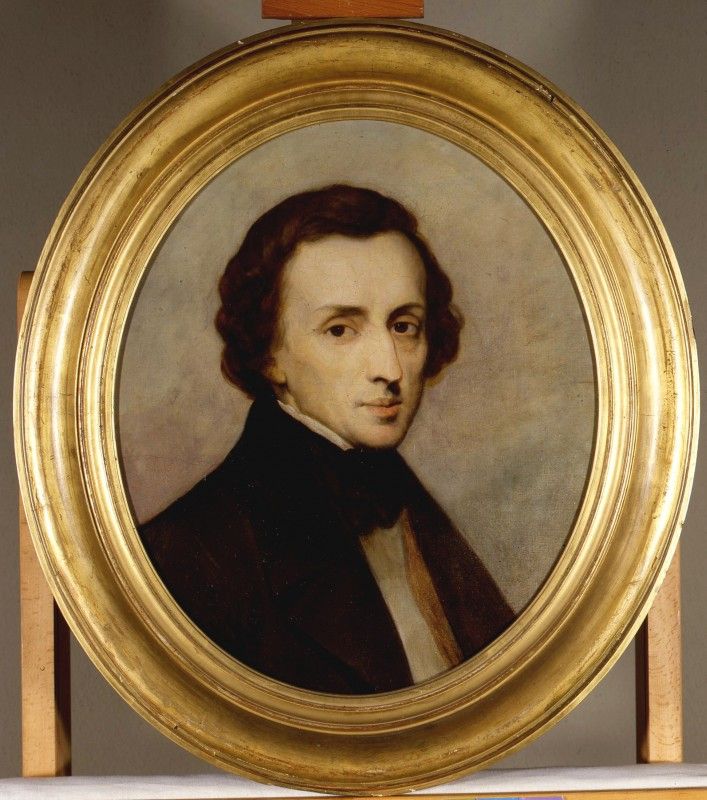
Dutch-Polish historical relations comprise many close friendships. One such friendship existed between composer Fryderyk Chopin (1810-1849) and the Dutch-French painter Ary Scheffer (1795-1858). Scheffer was born in Dordrecht and came from a family of artists. In 1811, he moved with his mother to Paris, where he quickly gained popularity as a painter. He made portraits of numerous well-known people, such as Marquis de La Fayette and Franz Liszt. Chopin arrived in Paris in 1831 and would never return to Poland, becoming one of the famed expatriates of the Polish Great Emigration. Scheffer and Chopin met in Paris and became good friends. Chopin gave concerts at Scheffer’s home on the Rue Chaptal 16, and Scheffer made three portraits of his Polish friend. The painting shown here dates from 1847 and is one of the best-known depictions of Chopin. It hangs in the Dordrechts Museum, in the town where Scheffer was born. He became a naturalized Frenchman in 1850. A statue of Scheffer stands in the center of Dordrecht.
*I originally wrote this post for the social media outlets of the Dutch Embassy in Poland. This was post no. 9.
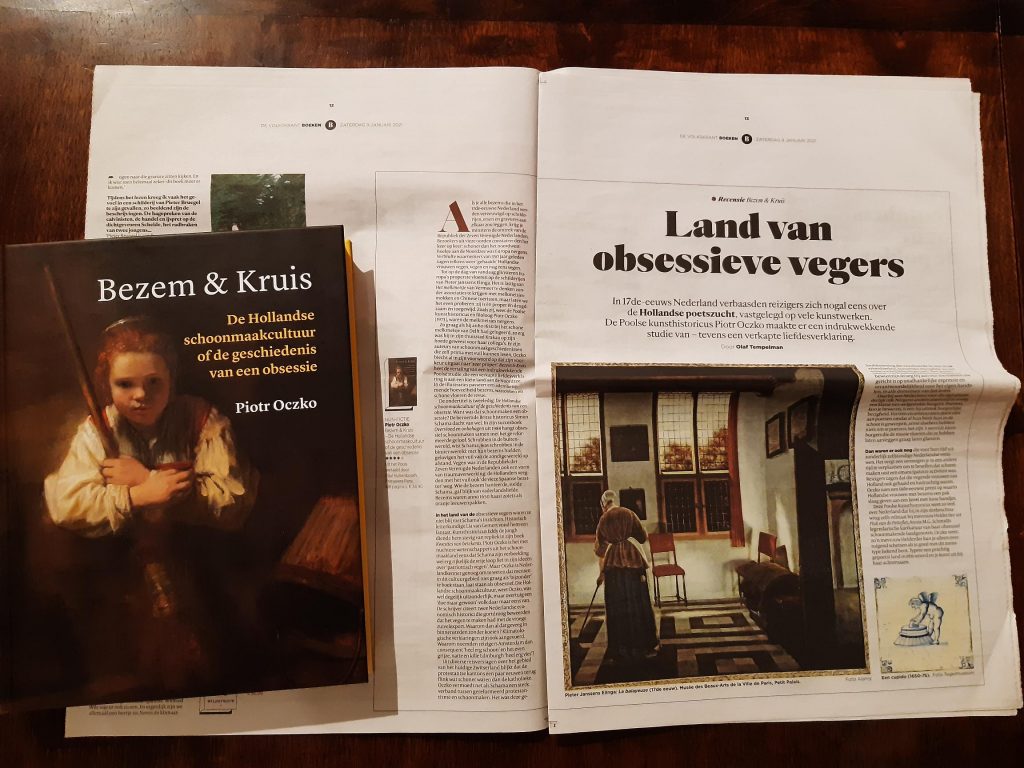
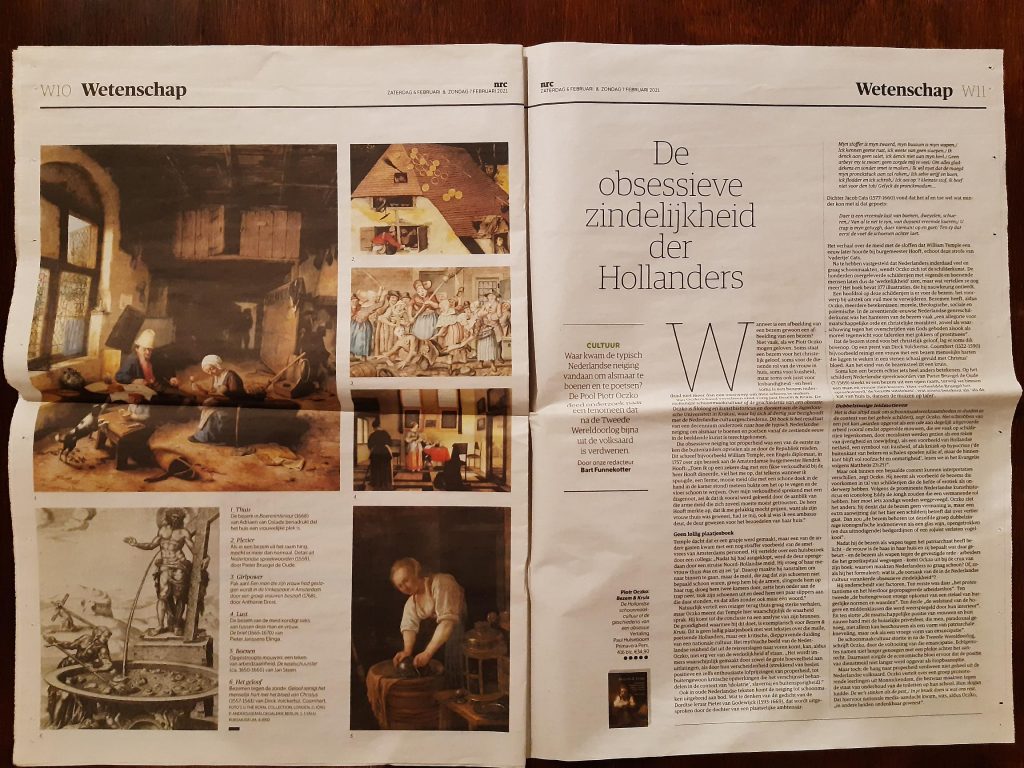
Bezem & Kruis: De Hollandse schoonmaakcultuur of de geschiedenis van een obsessie, mijn vorig najaar verschenen vertaling van een Poolse studie van letterkundige en kunsthistoricus Piotr Oczko, krijgt mooie kritieken van onder meer de Volkskrant en het NRC Handelsblad. In de Volkskrant geeft Olaf Tempelman het boek 4 sterren. Hij typeert het als ‘een indrukwekkende studie naar de Hollandse poetszucht’ en ‘een verkapte liefdesverklaring aan een klein land aan de Noordzee.’ In het NRC is Bart Funnekotter nog positiever: 5 ballen. ‘Dit is geen lollig plaatjesboek met wat tekstjes over die malle, poetsende Hollanders,’ zo stelt hij, ‘maar een kritische, diepgravende duiding van een nationale cultuur.’ De recensies zijn respectievelijk hier en hier te lezen.
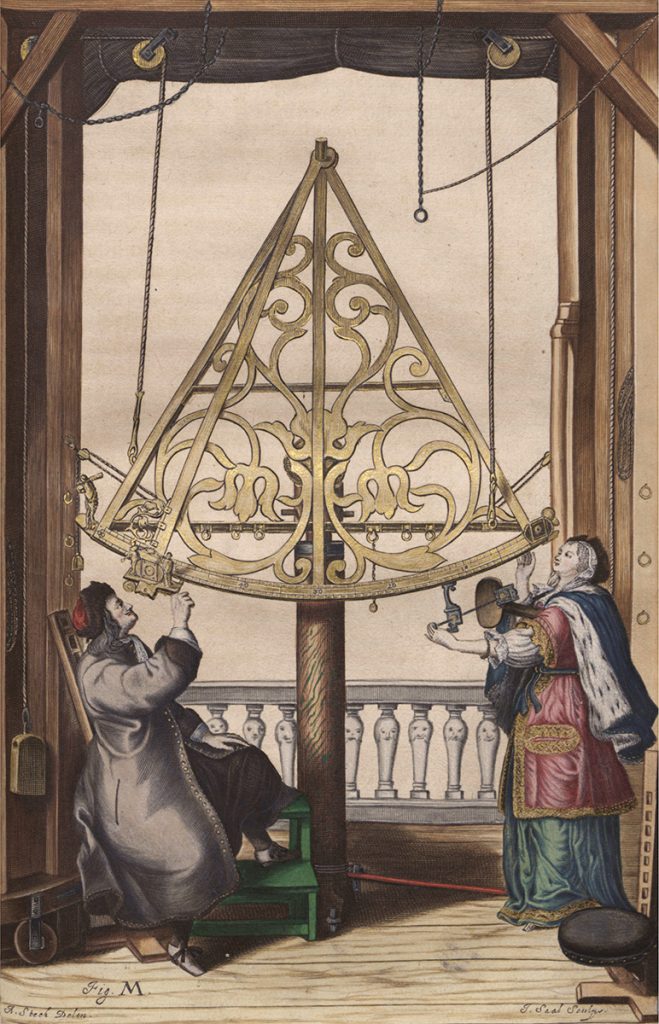
Elisabeth Hevelius (1647-1693), who lived and worked in Gdańsk, is considered one of the first female astronomers. She was the daughter of Nicolaas Koopman and Johanna Mennings, who had married in Amsterdam and later settled in Gdańsk. When she was but sixteen years old, Elisabeth married the fifty-two-year-old scientist and beer brewer Johannes Hevelius. The pair shared a passion for star gazing and astronomy. They had a large and famous observatory in Gdańsk, where they studied the night’s sky. They also had four children. Elisabeth knew Latin and corresponded with various scientists. After Johannes’ death, Elisabeth continued their work. In 1690, with the financial aid of King Jan III Sobieski, she published Prodromus Astronomiae, a catalogue of 1.564 stars and their positions. The image is taken from a book from 1673, and it shows Elisabeth and Johannes at work in their observatory.
*I originally wrote this post for the social media outlets of the Dutch Embassy in Poland. This was post no. 8.
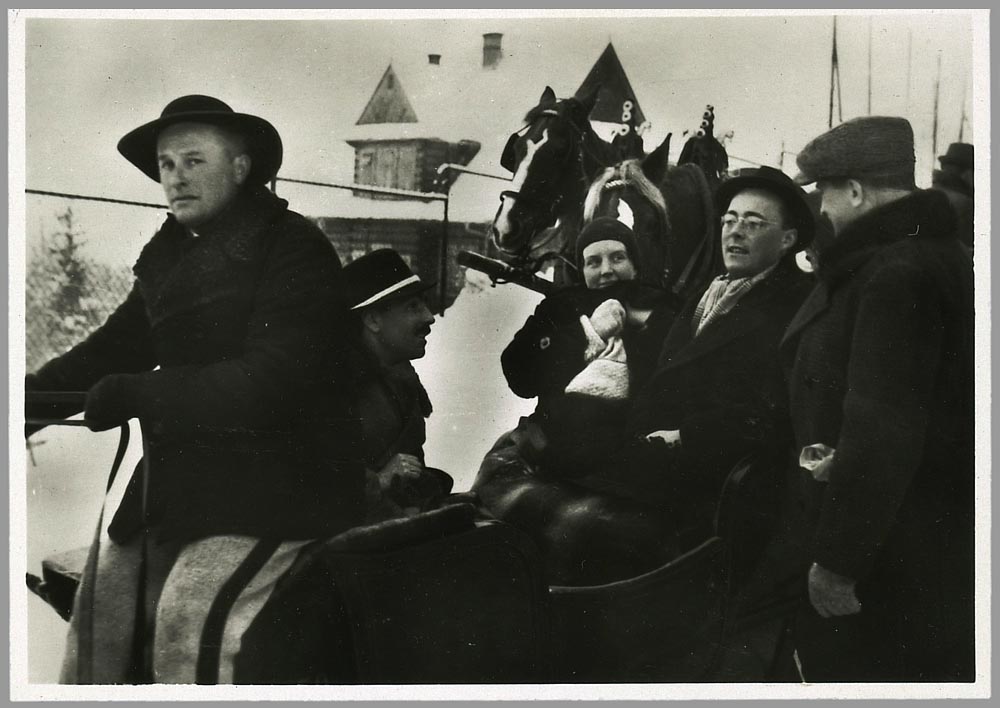
On 7 January 1937, Princess Juliana, the later Queen of the Netherlands, married Prince Bernhard of Lippe-Biesterfeld. The couple spent their honeymoon touring through Europe. Poland was their first destination. They stayed in Krynica-Zdrój, a spa town in the Beskid Mountains. To avoid the press, they travelled incognito as Count and Countess Von Sternberg, but the media caught up with them within a few days. The royal couple stayed in Hotel Patria, built by singer and movie star Jan Kiepura. In a Polish newspaper from 12 January, Prince Bernhard stated: “I have many Polish friends. Very many. So we came here.” The young couple had a great time in Krynica-Zdrój, where they were joined by numerous friends in order to ski, hunt, and party. Because of their presence, the town itself became famous. The princess and prince stayed in Krynica-Zdrój for four weeks, after which they left for Budapest.
This postcard from the Dutch Royal Library shows the royal couple in Poland:
*I originally wrote this post for the social media outlets of the Dutch Embassy in Poland. This was post no. 7.
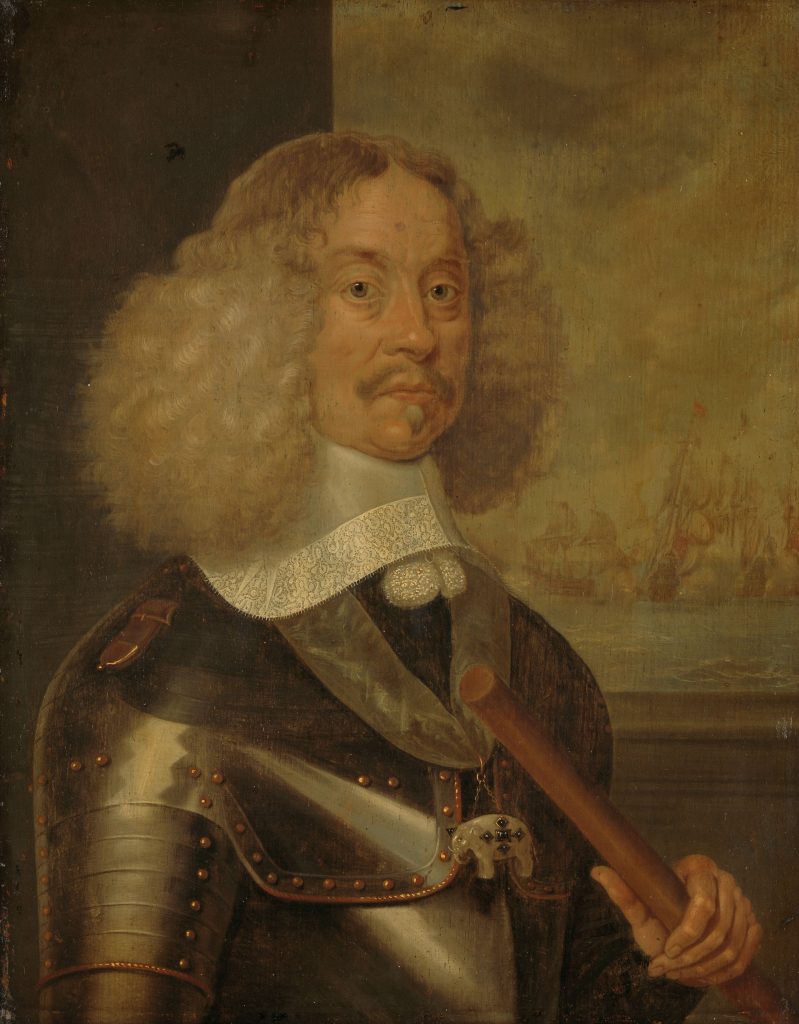
Voor de website Maritiem Portal schreef ik een blog getiteld De echte vliegende Hollander: Jacob van Wassenaer Obdam in gedichten uit 17e-eeuws Gdańsk. Ik bespreek daarin de wijze waarop de Nederlandse admiraal Van Wassenaer Obdam (1610-1665), die in eigen land een twijfelachtige reputatie genoot, besproken wordt in Latijnse gedichten uit Gdańsk/Danzig, de Baltische havenstad die eeuwenlang bij het Pools-Litouwse Gemenebest hoorde.
Abraham Evertsz. van Westerveld, Portret van Jacob van Wassenaer Obdam, ca. 1660.
Van Wassenaer Obdam maakte zich meermaals verdienstelijk voor Gdańsk, hetgeen tot uiting komt in meerdere lofdichten die ik gevonden heb tijdens archiefonderzoek ter plaatse. De dichters benadrukken de banden tussen de admiraal (en de Nederlandse Republiek als geheel) en hun stad, alsook de spectaculaire dood van de vlootvoogd, die in 1665 omkwam tijdens de Slag bij Lowestoft. De gedichten vormen een van de vele culturele sporen van de ‘moedernegotie’ en getuigen van de verwevenheid van de belangen van de Republiek en Gdańsk in de zeventiende eeuw.
Santa gave me a particularly lovely Christmas present this year: a freshly published peer-reviewed publication! It is entitled ‘Better than Pindar? The Ode by Sidronius Hosschius to Sarbievius and Its Two Versions’ and is published in Terminus, a journal for Neolatin studies, in an issue devoted to “the Sarmatian (i.e. Polish) Horace”, Mathias Casimirus Sarbievius (Maciej Kazimierz Sarbiewski, 1595–1640). My paper contributes to our knowledge of the international fame Sarbievius’s poetry enjoyed in the Early Modern age.
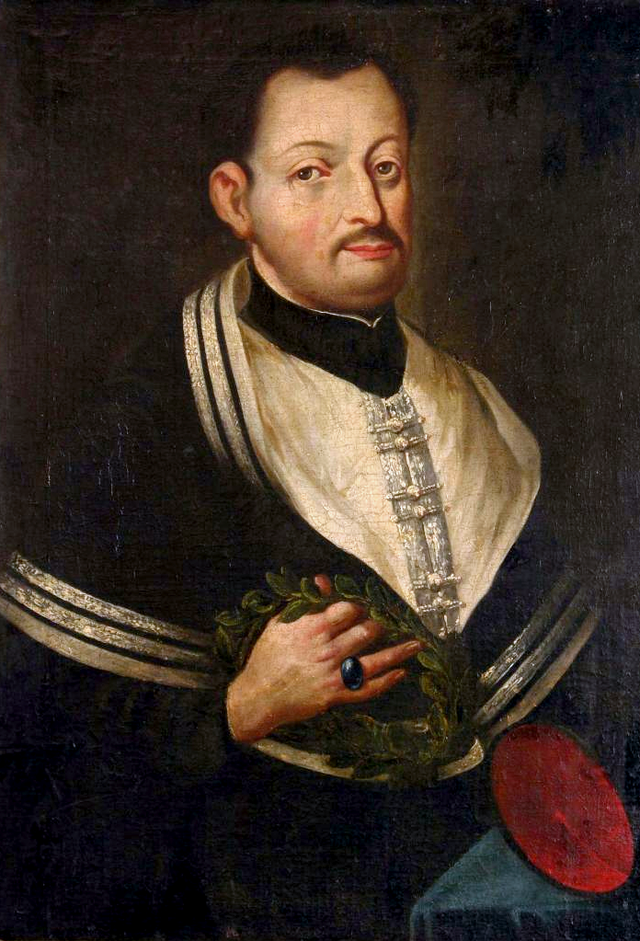
Mathias Casimirus Sarbievius
The main aim of the paper is to present and analyse an ode by the Flemish Jesuit Sidronius Hosschius (Sidronius [or Syderoen] de Hossche, 1596–1653) to Sarbievius. This eulogy has often been viewed as a masterpiece. In addition, it has two distinct versions: one published in a collection of poems in honour of Sarbievius (the so-called Epicitharisma), first printed in an edition of his oeuvre in 1632, and one in the collective volume of Hosschius’s own works issued posthumously in 1656. Both versions were first published by the famous Plantin-Moretus printing house in Antwerp. I have previously written two other papers, also dealing with poems to Sarbievius, composed by the Frenchman Gilbertus Joninus and the Fleming Jacobus Wallius.
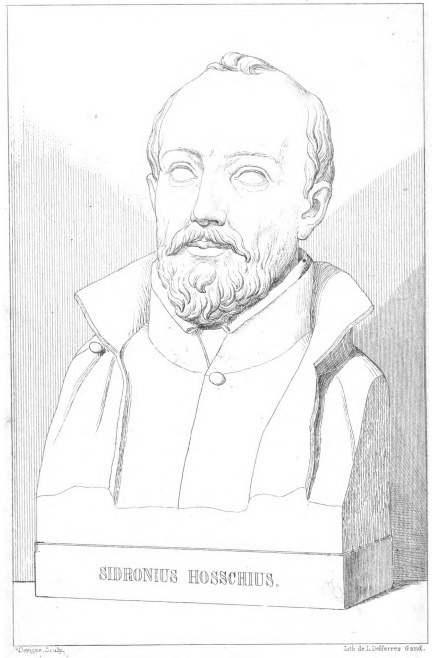
Sidronius Hosschius
The paper consists of three sections. The first one focuses on the relationship between Hosschius and Sarbievius and on the Nachleben of Hosschius’s ode. The second section offers a general analysis of the poem. Tracing the contents of Hosschius’s ode and its sources of inspiration, it argues that Hor. Carm. IV 2 is central to the poem’s understanding. The third section discusses the differences between the two versions, in an attempt to disclose why the poem was altered and how the changes influence the ode’s meaning. A number of larger changes affect the poem’s central message: while in the earlier version Sarbievius is said to outdo Pindar and even Horace, the later version is more cautious. All it does is admit that Sarbievius could perhaps equal Pindar and Orpheus.
Hosschius’s eulogy and the reception of Sarbievius through his composition have two different traditions: 1) the one found in most editions of Sarbievius’s works, where the poem basically proclaims him to be the best Latin lyricist of all time, thereby tying in with other laudatory contributions and promoting both Sarbievius’s oeuvre and the editions themselves, and 2) the one added to Hosschius’s own poetry, where the adjusted version—which contains more references to ancient literature and which could be called more personal, as well as, perhaps, more realistic—became a fan favourite.
In both instances, however, the reinterpretation of the psychological effect of poetry—the translation of furor poeticus from the author to the reader—and the re-evaluation of the concept of aemulatio could be the main reason why Hosschius’s ode was so highly valued.
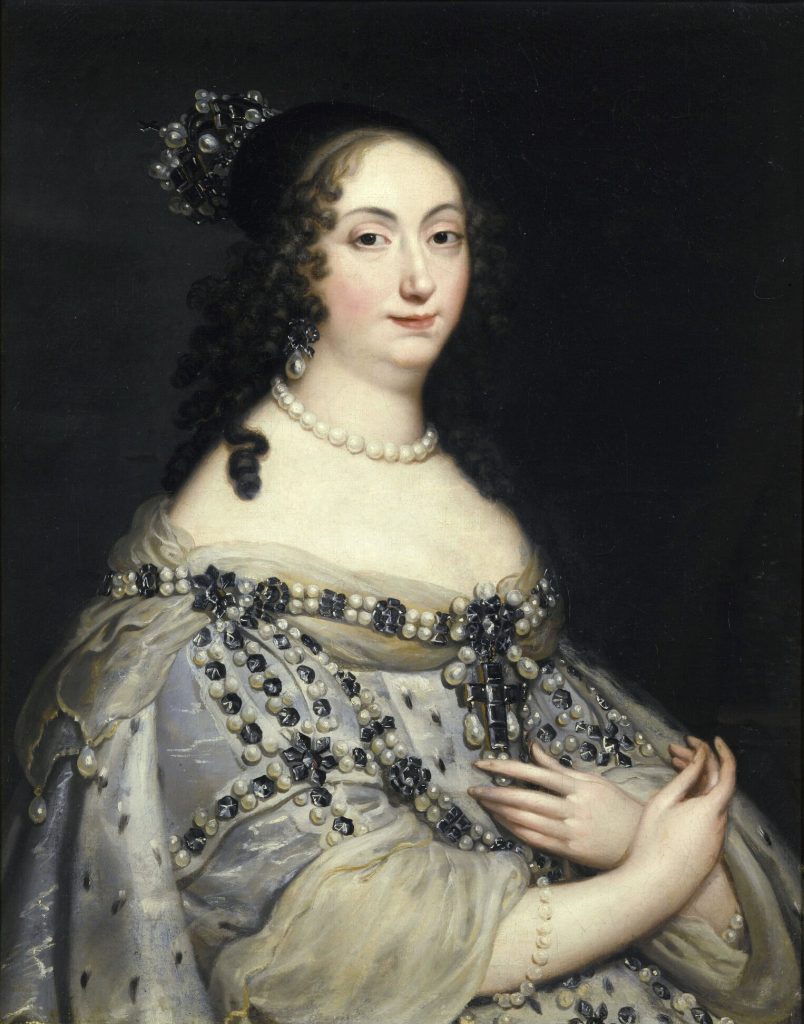
Christmas in 1645 was extra special in the Dutch Republic: Marie-Louise de Gonzague, the new queen of Poland, travelled from Paris to Warsaw via the Netherlands. She arrived in Utrecht on Christmas Day, where she was welcomed by an ice skating crowd. On Boxing Day, she set forth to Amsterdam. She was greeted by one thousand soldiers and a salvo of cannon fire. A few days later, Marie-Louise met Prince Willem, son of stadtholder Frederik Hendrik, and admired the Schouwburg theatre. Having returned to Utrecht, she there spent New Year’s Eve. Find out more here.
*I originally wrote this post for the social media outlets of the Dutch Embassy in Poland. This was post no. 6.
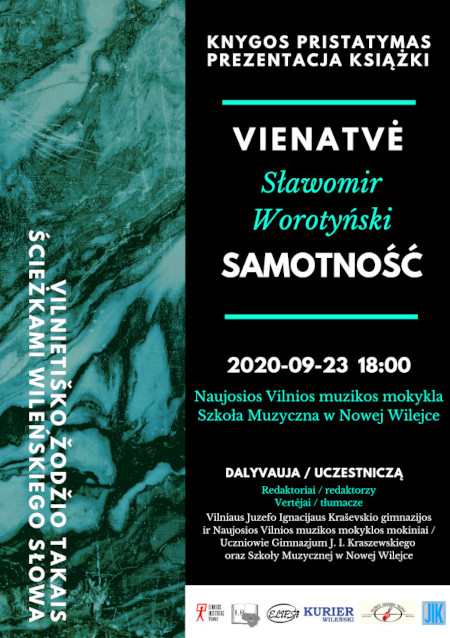
Onlangs verscheen in Vilnius de dichtbundel Samotność (Eenzaamheid) van de Poolse dichter Sławomir Worotyński (1942-1983). De bundel bevat vijf van zijn gedichten, in zowel het originele Pools als in zes andere talen: Litouws, Russisch, Noors, Grieks, Italiaans en Nederlands. Ik mocht de Nederlandse vertalingen voor mijn rekening nemen.
De bundel is het eerste deel in een nieuwe serie uitgaves, getiteld Ścieżkami wileńskiego słowa/Vilniškio žodžio takais (Over de paden van het Vilnische woord), die als doel heeft meer aandacht te genereren voor de banden tussen Poolse en Litouwse literatuur. Hoewel Worotyński namelijk schreef in het Pools, werd hij geboren in het huidige Litouwen en debuteerde hij in een tijdschrift uit Vilnius.
De volledige titelgegevens van de bundel luiden: Sławomir Worotyński/Славомир Воротынский/Σλαβομιρ Βοροτινσκι, Samotność/Vienatvė/Одиночество/Ensomhet/Μοναξιά/Solitudine/Eenzaamheid, Paweł Krupka and Viktoras Tamošiūnas (eds.) (Vilnius: Krajowe Stowarzyszenie Literatów Polskich/Respublikinė lenkų rašytojų draugija 2020).
De aankondigingsposter van de presentatie van de bundel.
Freedom is central to Dutch and Polish history. Ever since the Dutch rebelled against the Spanish king, in the sixteenth century, their love for freedom has often been labelled typically Dutch. At the same time, Polish nobles developed their idea of Aurea Libertas, Golden Liberty, which stood for the privileges of the nobility. Both the Dutch and Poles, therefore, idolized a state system in which power was shared, not held by one monarch. Still, there were notable differences as well: while the Polish idea of Golden Liberty concerned the nobles, power in the Dutch Republic mostly lay with rich and powerful burghers and merchants. Moreover, the Dutch increasingly disapproved of the Polish love for freedom, which they thought was exaggerated and led to anarchy. In the eighteenth century, several Dutch authors argued that this was the cause of Poland’s eventual downfall.
The picture shows a statue from the tomb of William of Orange, in Delft. The figure holds a so-called freedom hat, which was a symbol of freedom. It is inscribed with the words Aurea Libertas: Golden Liberty.
*I originally wrote this post for the social media outlets of the Dutch Embassy in Poland. This was post no. 5. Also see my previous post (in Dutch), on early modern Dutch responses to Polish Golden Liberty.
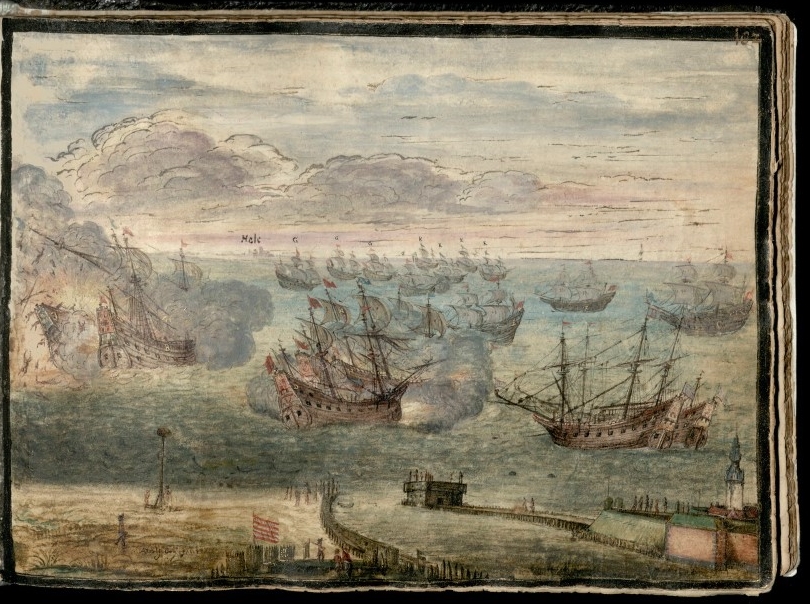
On this day in 1627, the Polish fleet defeated the Swedes at the Battle of Oliwa, near Gdańsk. The battle was part of the Polish-Swedish War of 1626-1629. The Polish fleet was commanded by admiral Arend Dickmann, who is said to have been of Dutch descent. Dickmann won the day, but was hit by a cannonball and died. He was buried in St. Mary’s Church in Gdańsk, along with the Swedish admiral Nils Stiernsköld and Jan Storch, captain of the Polish fleet. The battle and funeral were witnessed and described by a delegation of Dutch diplomats. Find out more here.
*I originally wrote this post for the social media outlets of the Dutch Embassy in Poland. This was post no. 4.