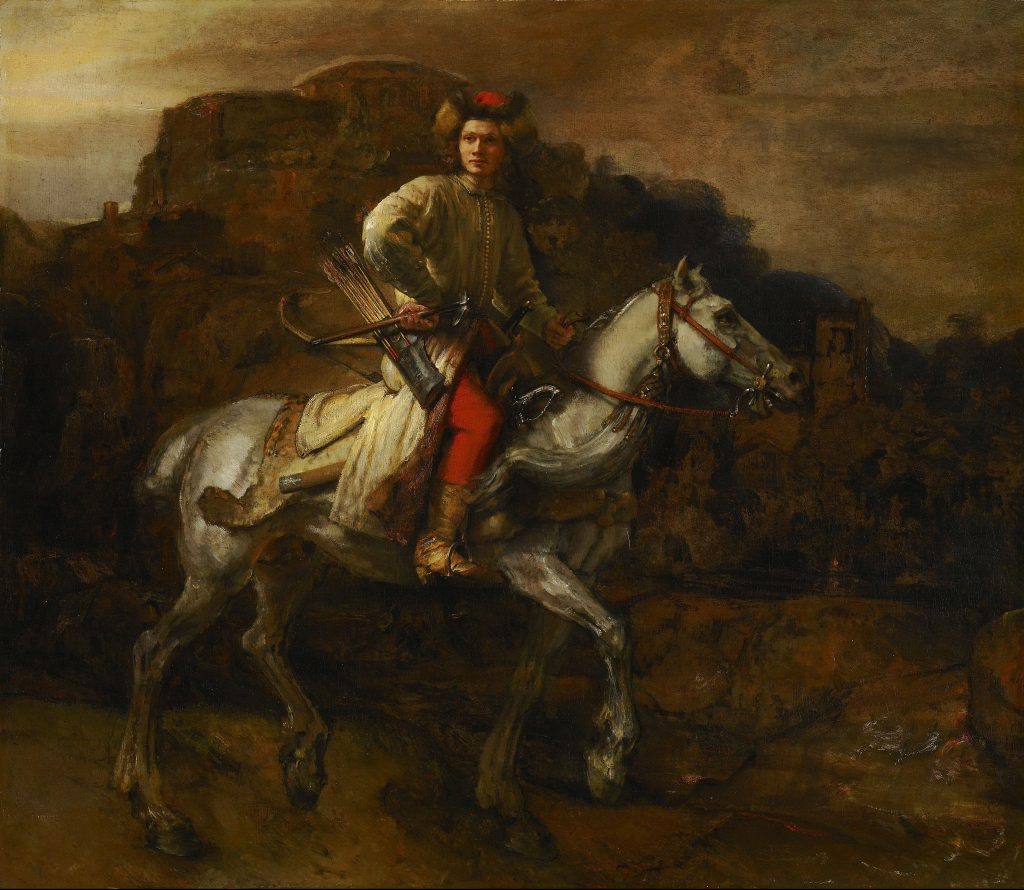
On June 29, the exhibition Świat Rembrandta (Rembrandt’s World) opened in the Royal Castle in Warsaw. Rembrandt has many links to Poland. To begin with, he produced numerous etchings and paintings of Poles or people in supposedly Polish guises. There is much debate about several of these works, however. Much has been written, for instance, about his so-called Polish Rider from 1655, which shows a horseman in what many scholars have defined as a Polish costume. The rider has been identified variously as a specific Polish nobleman, a generic Cossack, a personification of a Christian knight, a champion of religious freedom, or a literary character. Another of Rembrandt’s paintings is commonly entitled A Polish Nobleman. This portrait, dated 1637, might depict the Polish diplomat Andrzej Rey, but he has also been described as a Russian boyar. Apart from these examples, Rembrandt’s oeuvre also includes drawings and etchings of people who appear to be wearing Polish dress.
Furthermore, Rembrandt’s brother in law was Jan Makowski (or Joannes Maccovius), professor of theology at the University of Franeker. Makowski’s portrait is part of the exhibition in Warsaw.
*I originally wrote this post for the social media outlets of the Dutch Embassy in Poland. This was post no. 18.
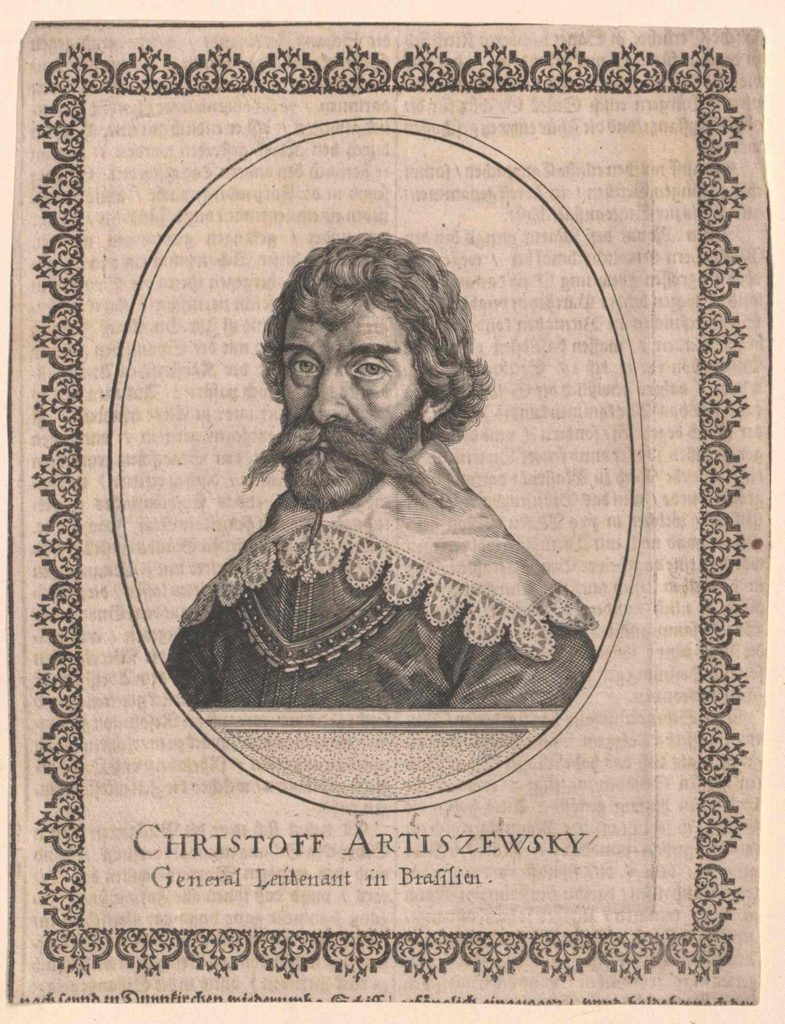 Numerous Poles live and work in the Netherlands today, and they have been doing so for hundreds of years. One of the most colourful and famous examples is the Protestant nobleman Krzysztof Arciszewski (1592-1656), an officer, engineer and author, who through became something of a celebrity in both the seventeenth-century Netherlands and Poland. Arciszewski first arrived in Holland in 1624, at the time of the Eight Years’ War, and until 1629 actively participated in a number of battles in both the Low Countries and France, always fighting on the Protestant side. For example, he partook in the Dutch attempts to end the Spanish siege of Breda in 1624-1625, and he fought in the siege of ’s-Hertogenbosch in 1629. Moreover, he studied military engineering and artillery at Leiden University. In 1629, Arciszewski was offered a three-year contract with the Dutch West-India Company and in the rank of captain left for Brazil. He celebrated multiple victories against the Portuguese, and was eventually promoted colonel. After the arrival, in 1637, of the new governor-general, Count John Maurice of Nassau-Siegen (1604-1679), Arciszewski continued to play a key role in the Brazilian campaign, but disagreements between the two men led to Arciszewski’s return to Holland in 1639. He broke with the Dutch military, but stayed in the United Provinces until 1646, at which time he was summoned back to Poland and nominated royal general of artillery. Arciszewski next participated in a number of battles against the Turks and Cossacks, before retiring in 1649. He died in 1656.

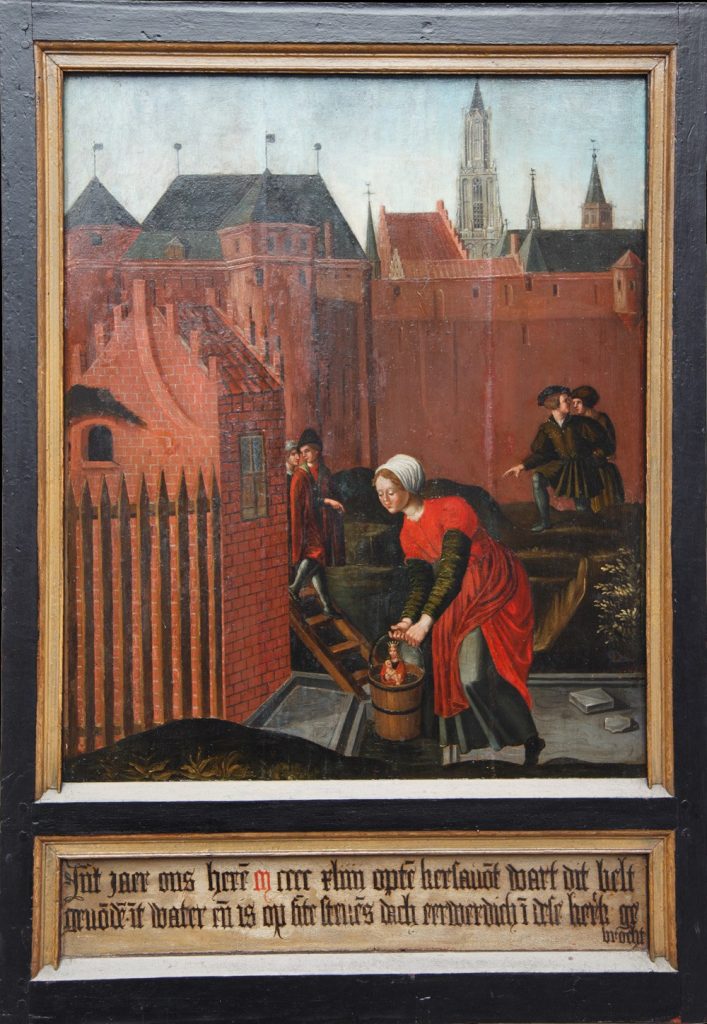 Did you hear about the medieval pilgrim from Gdańsk who visited the Netherlands? The story begins around Christmas 1444, when something remarkable occurred in Amersfoort, near Utrecht: a local girl, Margriet Gijsen, purportedly had three visions, in which God told her to go to a canal outside the city and find a statue of the Virgin Mary. Margriet did so and pulled the statue out of the icy water. This event was interpreted as a miracle, and Amersfoort quickly grew into an well-known place of worship. Pilgrims from all over Europe came to honour the statue, particularly on the Sunday before Pentecost. The miracle of Margriet and ca. 550 other miracles related to the statue are recorded in the so-called Mirakelboek, which starts in 1444 and ends in 1545. The statue was especially popular with shipmen and evoked in case of sea storms, shipwreck and drowning.
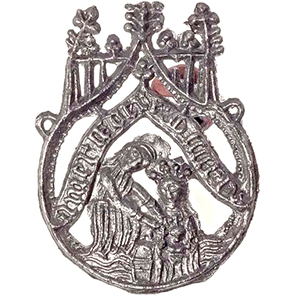 The story can be related to a pilgrim’s badge from Amersfoort, which was found in or near Gdańsk. The badge depicts the moment when Margriet pulled the statue of Mary out of the water. Such badges were made at the place of worship and could be purchased by pilgrims, who then took them back home. The badge shows the importance and popularity of Amersfoort as a medieval pilgrimage site, which really was visited by people from Gdańsk. Perhaps the man from the story took a badge home as well…
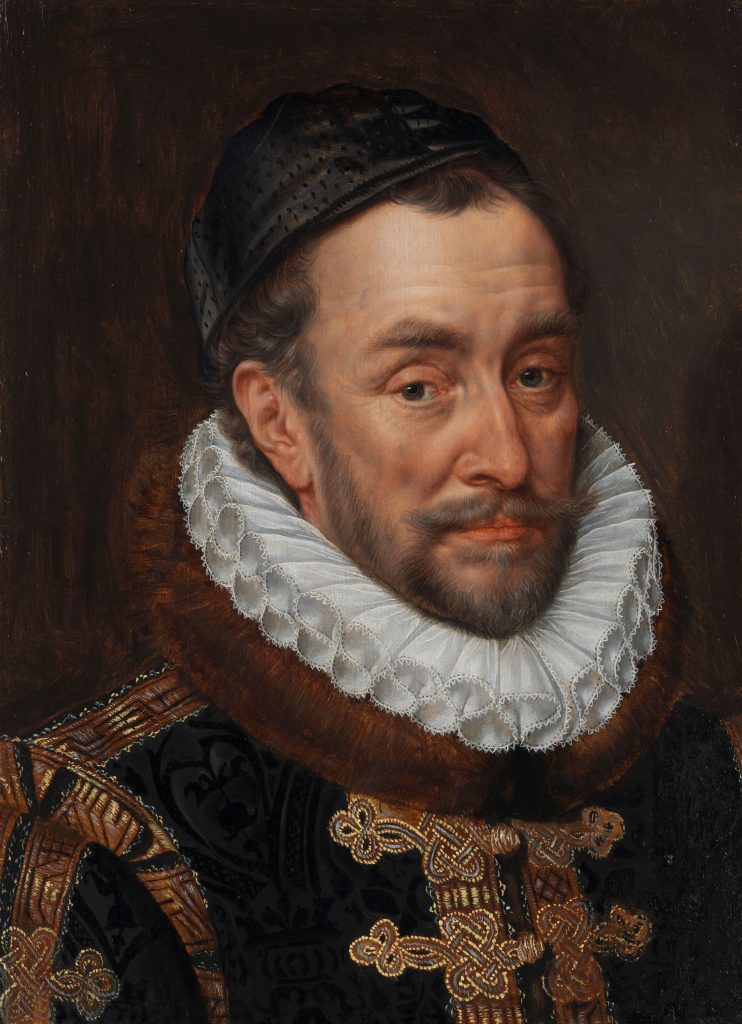 Coming Tuesday is King’s Day in the Netherlands. Did you know that William of Orange, who is often called the Dutch “father of the fatherland”, had an interest in the royal elections in Poland in 1575? He may even have considered making a bid for the Polish throne himself. At the time, William was leading the Dutch in a war against Spain. In March 1575, his councillor Philips of Marnix, Lord of Saint-Aldegonde, visited Cracow, where he met with the Polish nobleman and influential Calvinist Piotr Zborowski. The Polish throne was at that time vacant, and preparations were being made for the election of a new monarch. Zborowski wrote to William, praising his struggle “for religion and for the freedom of your fatherland”, and explaining how Marnix’s visit had been essential for “our actions”. It is not known what these “actions” were, however. Perhaps Marnix was meant to inquire about William’s chances, should he submit his candidacy for the Polish throne. As King of Poland, William’s odds in the fight against Spain would increase significantly. On the other hand, William may not have considered entering the elections at all. Perhaps Marnix simply wished to offer support to the Polish Calvinists’ “actions”, trying to influence the royal elections in the hope of gaining the favour of the future king. In any case, William did not make an official bid for Polish power. Instead, Stephen Báthory was elected King of Poland in 1576.