Category Archives: Embassy

A Female Astronomer in Gdańsk (NL Embassy in PL)

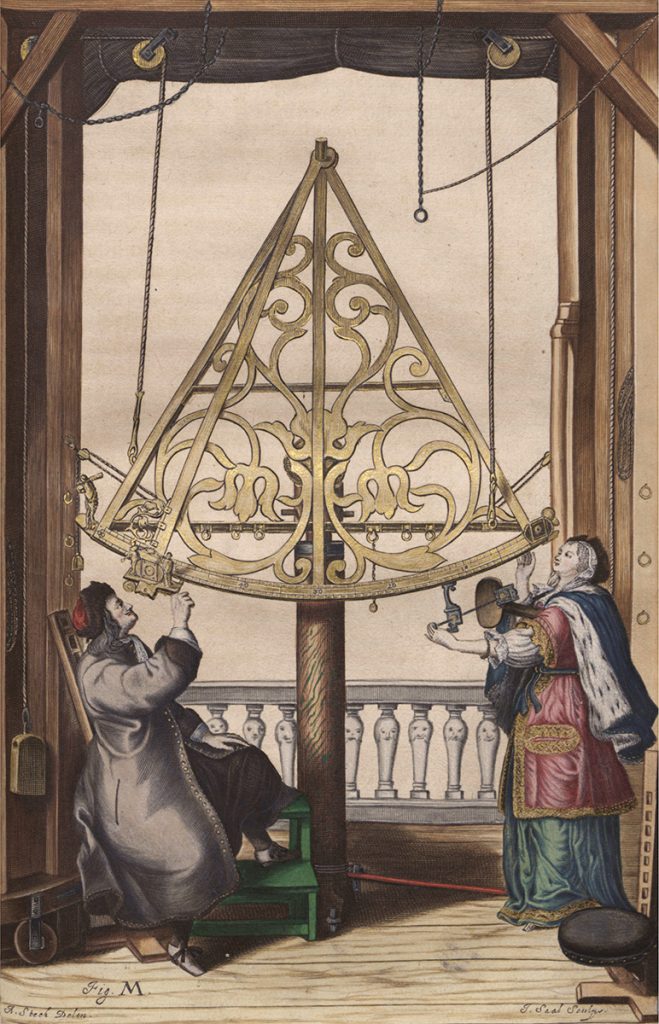
Elisabeth Hevelius (1647-1693), who lived and worked in Gdańsk, is considered one of the first female astronomers. She was the daughter of Nicolaas Koopman and Johanna Mennings, who had married in Amsterdam and later settled in Gdańsk. When she was but sixteen years old, Elisabeth married the fifty-two-year-old scientist and beer brewer Johannes Hevelius. The pair shared a passion for star gazing and astronomy. They had a large and famous observatory in Gdańsk, where they studied the night’s sky. They also had four children. Elisabeth knew Latin and corresponded with various scientists. After Johannes’ death, Elisabeth continued their work. In 1690, with the financial aid of King Jan III Sobieski, she published Prodromus Astronomiae, a catalogue of 1.564 stars and their positions. The image is taken from a book from 1673, and it shows Elisabeth and Johannes at work in their observatory.
*I originally wrote this post for the social media outlets of the Dutch Embassy in Poland. This was post no. 8.
A Dutch Queen in Poland (NL Embassy in PL)

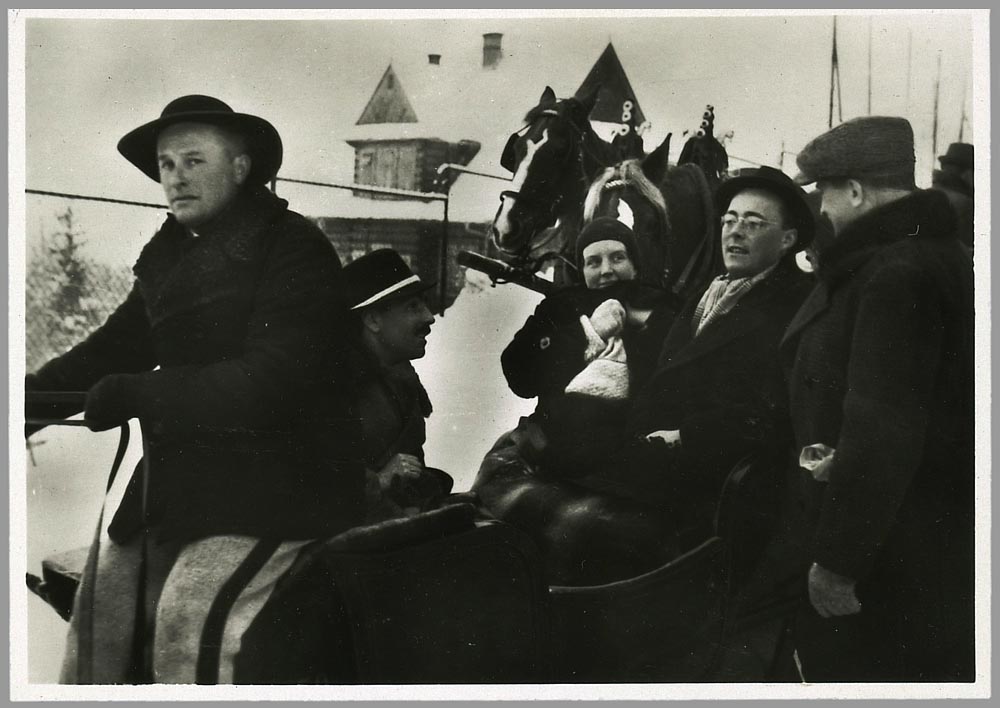
On 7 January 1937, Princess Juliana, the later Queen of the Netherlands, married Prince Bernhard of Lippe-Biesterfeld. The couple spent their honeymoon touring through Europe. Poland was their first destination. They stayed in Krynica-Zdrój, a spa town in the Beskid Mountains. To avoid the press, they travelled incognito as Count and Countess Von Sternberg, but the media caught up with them within a few days. The royal couple stayed in Hotel Patria, built by singer and movie star Jan Kiepura. In a Polish newspaper from 12 January, Prince Bernhard stated: “I have many Polish friends. Very many. So we came here.” The young couple had a great time in Krynica-Zdrój, where they were joined by numerous friends in order to ski, hunt, and party. Because of their presence, the town itself became famous. The princess and prince stayed in Krynica-Zdrój for four weeks, after which they left for Budapest.

This postcard from the Dutch Royal Library shows the royal couple in Poland:

*I originally wrote this post for the social media outlets of the Dutch Embassy in Poland. This was post no. 7.

A Polish Queen in the Netherlands (NL Embassy in PL)

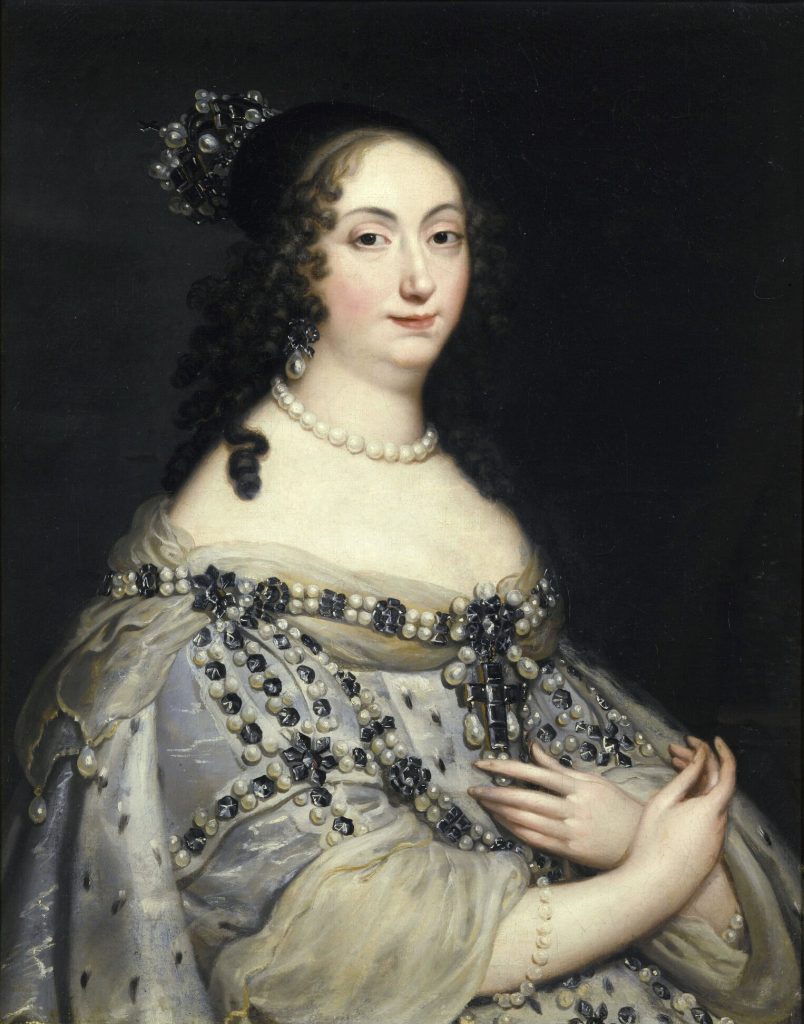
Christmas in 1645 was extra special in the Dutch Republic: Marie-Louise de Gonzague, the new queen of Poland, travelled from Paris to Warsaw via the Netherlands. She arrived in Utrecht on Christmas Day, where she was welcomed by an ice skating crowd. On Boxing Day, she set forth to Amsterdam. She was greeted by one thousand soldiers and a salvo of cannon fire. A few days later, Marie-Louise met Prince Willem, son of stadtholder Frederik Hendrik, and admired the Schouwburg theatre. Having returned to Utrecht, she there spent New Year’s Eve. Find out more here.

*I originally wrote this post for the social media outlets of the Dutch Embassy in Poland. This was post no. 6.

Dutch and Polish Freedom (NL Embassy in PL)

Freedom is central to Dutch and Polish history. Ever since the Dutch rebelled against the Spanish king, in the sixteenth century, their love for freedom has often been labelled typically Dutch. At the same time, Polish nobles developed their idea of Aurea Libertas, Golden Liberty, which stood for the privileges of the nobility. Both the Dutch and Poles, therefore, idolized a state system in which power was shared, not held by one monarch. Still, there were notable differences as well: while the Polish idea of Golden Liberty concerned the nobles, power in the Dutch Republic mostly lay with rich and powerful burghers and merchants. Moreover, the Dutch increasingly disapproved of the Polish love for freedom, which they thought was exaggerated and led to anarchy. In the eighteenth century, several Dutch authors argued that this was the cause of Poland’s eventual downfall.

The picture shows a statue from the tomb of William of Orange, in Delft. The figure holds a so-called freedom hat, which was a symbol of freedom. It is inscribed with the words Aurea Libertas: Golden Liberty.

*I originally wrote this post for the social media outlets of the Dutch Embassy in Poland. This was post no. 5. Also see my previous post (in Dutch), on early modern Dutch responses to Polish Golden Liberty.

The Battle of Oliwa: Poland defeats Sweden (NL Embassy in PL)

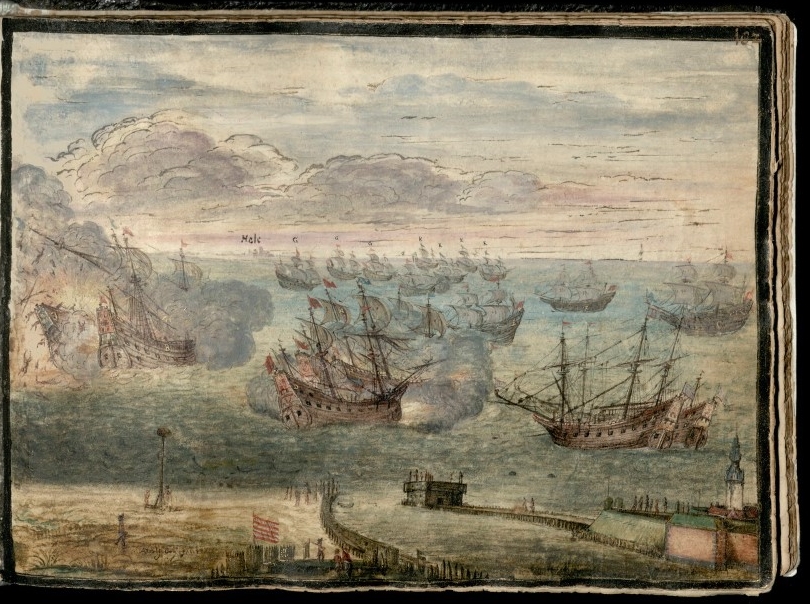
On this day in 1627, the Polish fleet defeated the Swedes at the Battle of Oliwa, near Gdańsk. The battle was part of the Polish-Swedish War of 1626-1629. The Polish fleet was commanded by admiral Arend Dickmann, who is said to have been of Dutch descent. Dickmann won the day, but was hit by a cannonball and died. He was buried in St. Mary’s Church in Gdańsk, along with the Swedish admiral Nils Stiernsköld and Jan Storch, captain of the Polish fleet. The battle and funeral were witnessed and described by a delegation of Dutch diplomats. Find out more here.

*I originally wrote this post for the social media outlets of the Dutch Embassy in Poland. This was post no. 4.

Jan III Sobieski and Romeyn de Hooghe (NL Embassy in PL)

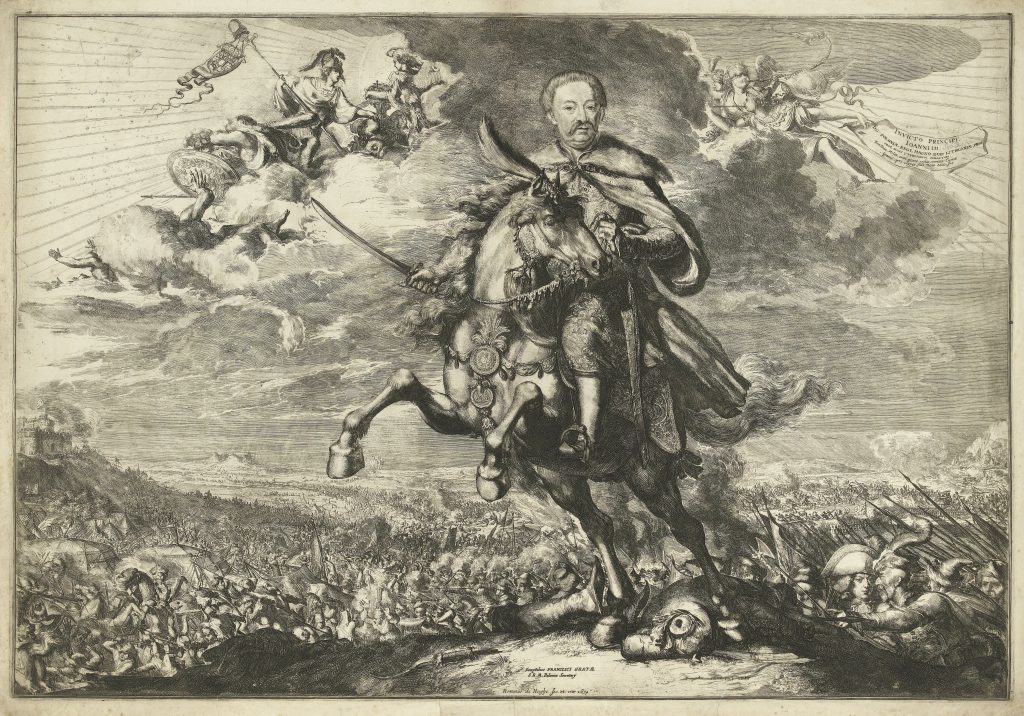
The most influential portrait of King Jan III Sobieski was made in 1674 by the Dutch artist Romeyn de Hooghe. It shows Sobieski at Chocim/Khotyn (in modern-day Ukraine), where he defeated the Ottoman armies on 11 November 1673. It was copied by various artists and helped spread Sobieski’s fame all over Europe. De Hooghe was granted the title Servitor Regis (servant of the king) and went on to produce several other engravings showing the Polish monarch. Following Sobieski’s victory at the Battle of Vienna in 1683, he was glorified by numerous Dutch artists and authors. More information about Sobieski and De Hooghe can be found in this recent Dutch article (which includes a summary in English).

Romeyn de Hooghe, Jan Sobieski at the Battle of Khotyn, 1674.

*I originally wrote this post for the social media outlets of the Dutch Embassy in Poland. This was post no. 3.

Stanisław Maczek and Breda (NL Embassy in PL)

Some of the best-loved Poles in the Netherlands are without doubt General Stanisław Maczek and his 1st Armoured Division. In October 1944, they liberated large parts of Noord-Brabant. Maczek and his men are mainly remembered for the liberation of Breda on 29 October, during which no serious damage was done to the city. The inhabitants welcomed their Polish liberators with open arms, and Maczek was awarded the honorary citizenship of Breda. Following the war, many of Maczek’s soldiers remained in Breda and other parts of the Netherlands, where their descendants live to this day. This year, on 3 June, the Maczek Memorial Breda was opened to the public. An online Dutch exhibition on Maczek and the 1st Armoured Division – the texts for which I translated – can be visited here.

*I originally wrote this post for the social media outlets of the Dutch Embassy in Poland. This was post no. 2.

The oldest Polish town with Dutch roots (NL Embassy in PL)

Starting today, I will write regular posts about Dutch-Polish historic relations for the Dutch Embassy in Poland. The posts will appear on Facebook, Instagram and Twitter, but I will copy them here as well.

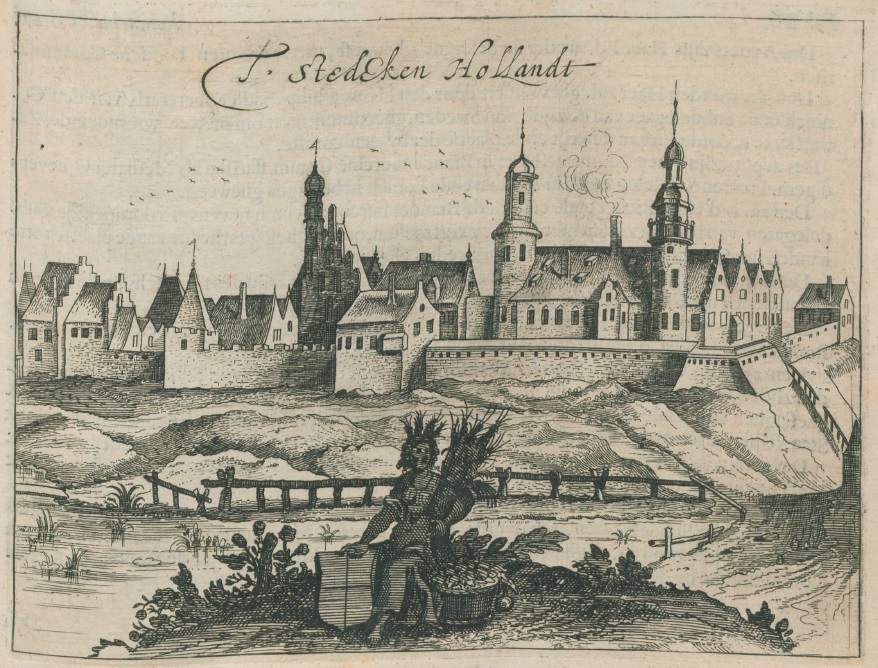
We begin with the oldest known town in Poland with Dutch roots. It was founded in 1297 in Prussian lands governed by the Teutonic Knights, and named after the settlers’ homeland: Holland/t (later known as ‘Preussisch Holland’). Some have argued that the founders may have been exiles and refugees, who had escaped their homeland following the murder of Count Floris V, in 1296. It is possible that Joost van den Vondel in 1637 referred to the founding of the town in his famous Gysbreght van Aemstel, when the play’s hero is advised to escape from Amsterdam to Prussia, and to build a ‘New Holland’ there. The settlement came under Polish rule in 1466 and was later part of the Duchy of Prussia, which remained a fief of Poland until 1657. A view of the town was included in a book printed in Amsterdam in 1632. In 1945, ‘Holland’ became part of Poland once more. Its modern name is Pasłęk, near Elbląg.

*I originally wrote this post for the social media outlets of the Dutch Embassy in Poland. This was post no. 1.