History plays a crucial role in the Ukrainian-Russian War, as President Putin continues to spread misinformation and a twisted version of Ukraine’s past to legitimise his invasion as an attempt to “reunite” Ukraine with Russia. Let us consider a bit of Ukrainian history, therefore, relating to the Netherlands, from a time when modern-day Ukraine was not part of Russia.
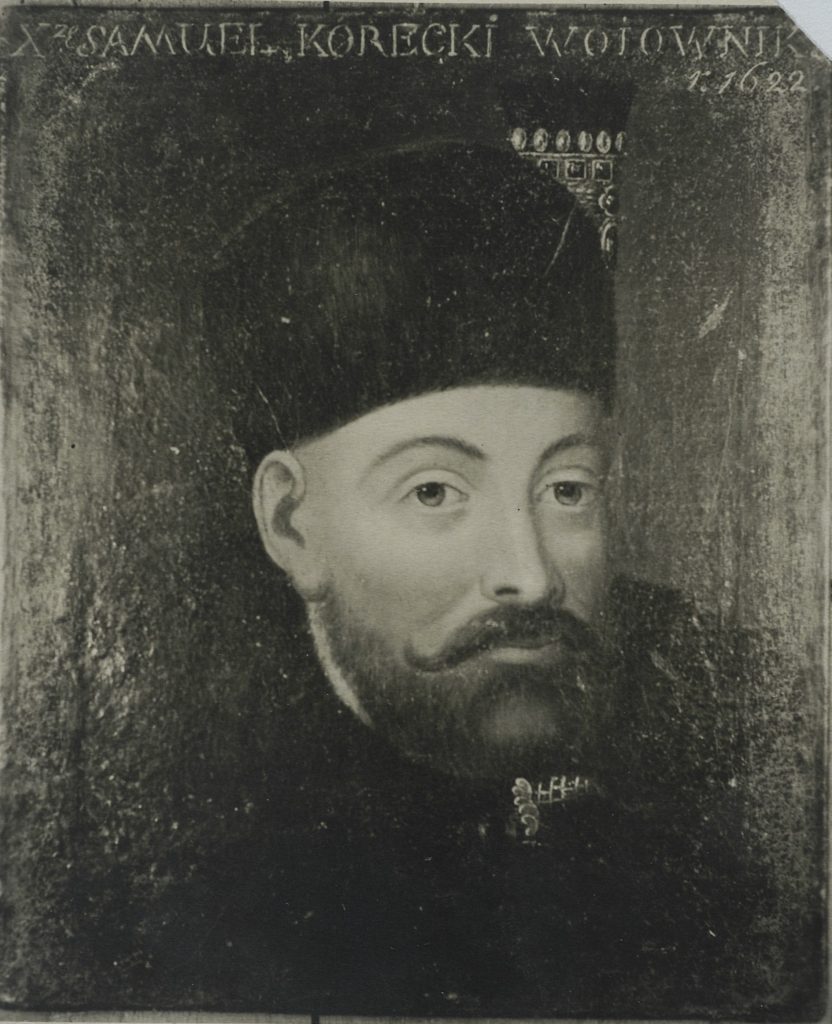 In July 1606, a young student called Samuel Korecki inscribed his name into the album amicorum (“book of friends”) of the Dutch scholar and mayor of Harderwijk, Ernst Brinck. Korecki’s name features amongst numerous well-known men of the time, such as Galileo Galilei. But who was he?
Samuel Korecki was a duke from the Polish-Lithuanian Commonwealth, whose family owned Korets Castle and vast estates in Volhynia. This region, currently in western Ukraine, had for a long time belonged to the Grand Duchy of Lithuania, but during the sixteenth century was incorporated into the Kingdom of Poland. Samuel Korecki was born there ca. 1586/88 and made a military career in service of the Polish-Lithuanian Commonwealth. During the Polish-Russian War of 1609-1618, he aided the Polish forces which occupied the Kremlin. He fought the Tatars and Moldavians on multiple occasions, and famously escaped Ottoman imprisonment. Returning home via Italy, he once again faced the Commonwealth’s southern enemies at the Battle of Cecora in 1620. Korecki was taken captive once more, and was eventually strangled by the Ottomans in Istanbul, in 1622.
So how did his name find its way into Ernst Brinck’s album amicorum? Before his military career, Samuel Korecki studied in the Northern Netherlands. He enrolled as an arts student at Leiden University on 29 May 1604, together with his younger brother Karol. This was not uncommon: since the founding of Leiden University in 1575, hundreds if not thousands of nobles from the Polish-Lithuanian Commonwealth studied in Leiden. Apparently, Samuel met Ernst Brinck and decided to inscribe his name into his “book of friends”.
When Samuel finished his studies, Dominicus Baudius, one of the university professors, wrote a Latin poem in his honour, which was published in Leiden in 1607. Baudius ended his eulogy by saying that “Themis [the ancient Greek goddess of justice] will lift your name above the high stars of the sky,” implying that his Volhynian friend deserved eternal praise.
The case of Samuel Korecki illustrates that Ukrainian history is not Russian history, and Dutch-Ukrainian relations go way back.
*I originally wrote this post for the social media outlets of the Dutch Embassy in Poland. This was post no. 28.
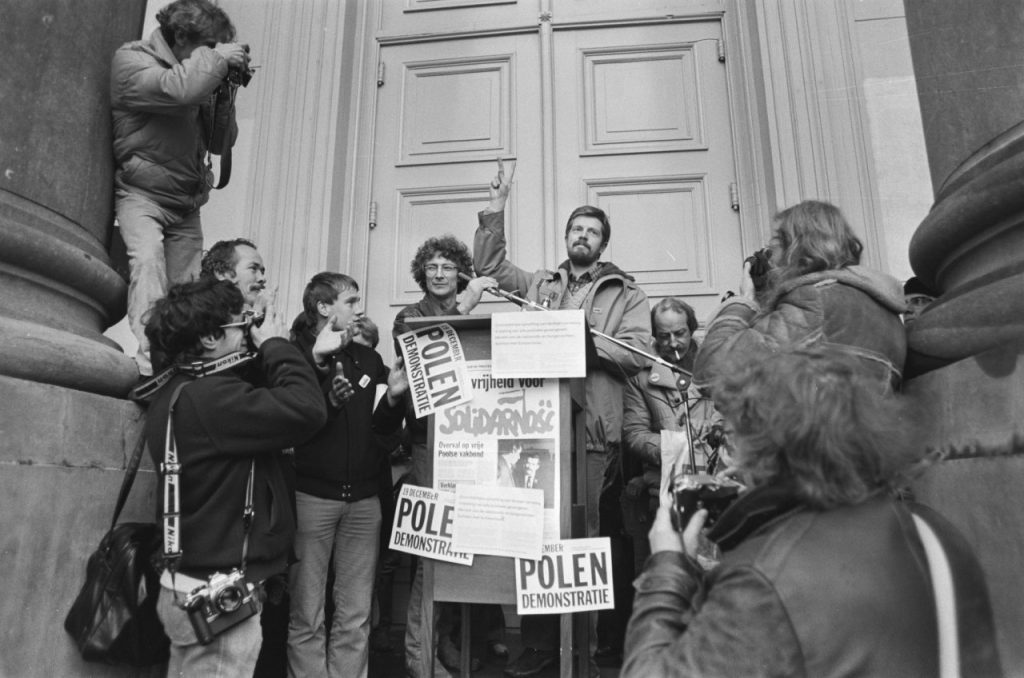
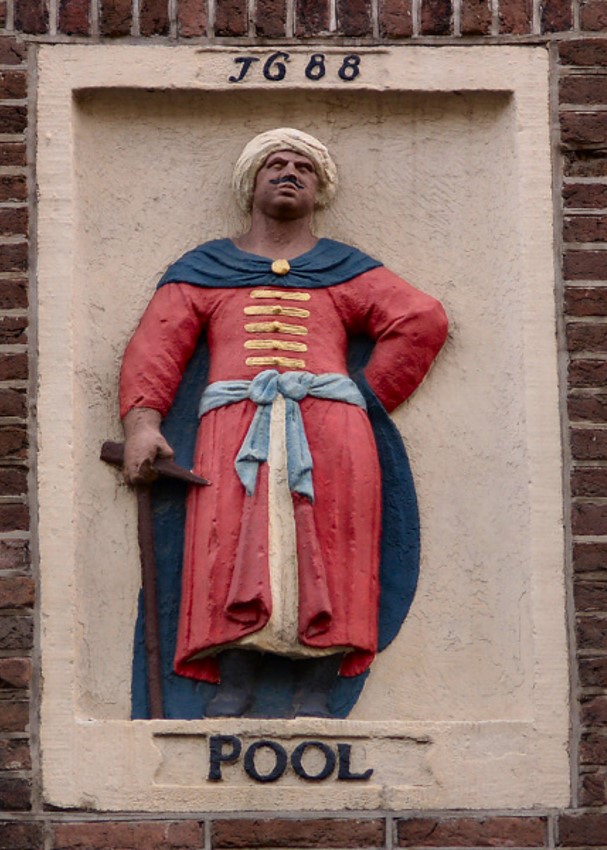 This time of year, many of us have a nativity scene in our homes. They commonly include the Three Kings, also known as Wise Men or Magi, who came to honour Christ after his birth. These Kings are often dressed in long oriental robes and turbans. What is less commonly known, is that such a look in the previous centuries was sometimes associated with Polish dress. This can be exemplified by a gable stone showing a ‘Pool’, which is dated 1688, and which adorns a building on the Kerkstraat 322 in Amsterdam.
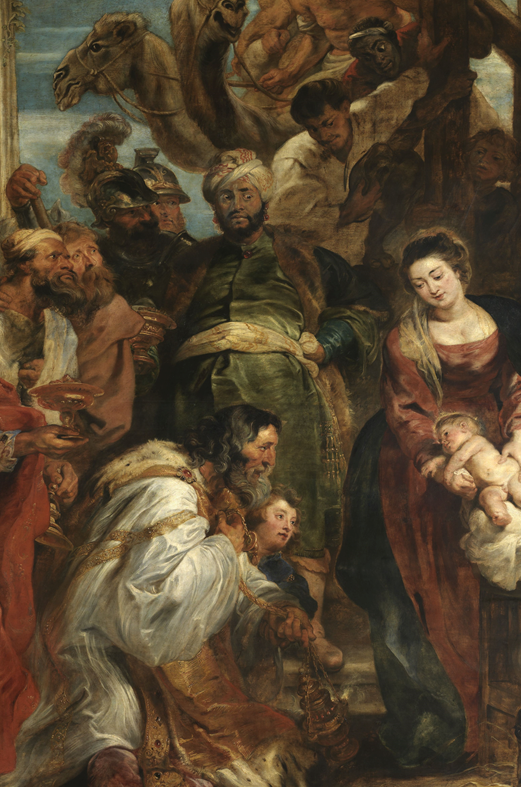 This is why the ‘Pool’ on the gable stone in Amsterdam looks the way he does. His clothing – which even includes a turban – and his posture are reminiscent of a man in a print by the Dutch engraver Lucas Vorsterman, after the Adoration of the Magi by the famed painter Peter Paul Rubens, a painting from 1621. Rubens in turn based himself on Italian illustrations. It is likely that the gable stone’s maker referred to the same pictorial tradition. This is how the ‘Pool’ on the gable stone in Amsterdam is related to nativity scenes.
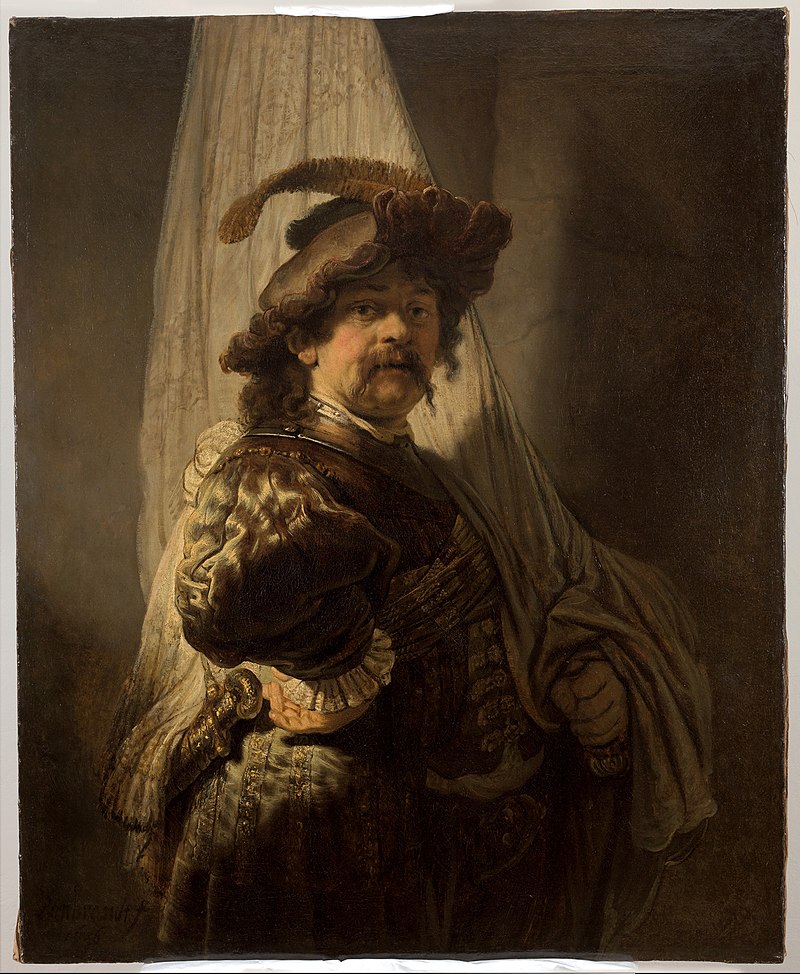 Last week, it was announced that the Rijksmuseum in Amsterdam – with financial aid from the Dutch state and several institutions – intends to buy ‘The Standard Bearer’, a painting by Rembrandt from 1636. Such standard bearers were high-placed members of town militias, not necessarily soldiers. Still, the painting offers an opportunity to reflect on a little-known aspect of Dutch-Polish historical relations: Polish soldiers in the seventeenth-century Dutch army. A travel account by the Pole Sebastian Gawarecki, written during the 1640s, discusses his stay in the Northern Netherlands alongside Marek and Jan Sobieski – the later king of Poland. On 16 May 1646, in the town of Bergen op Zoom, Gawarecki and the Sobieski brothers met “a Pole from Warsaw, who for some years now serves in the Dutch army as a standard bearer, and whom our Polish king [Władysław IV Waza] keeps in Holland at his own expense.” It is unknown who this Polish standard bearer was, but it was not unheard of for Poles to fight in the Dutch army, even if they were Catholics.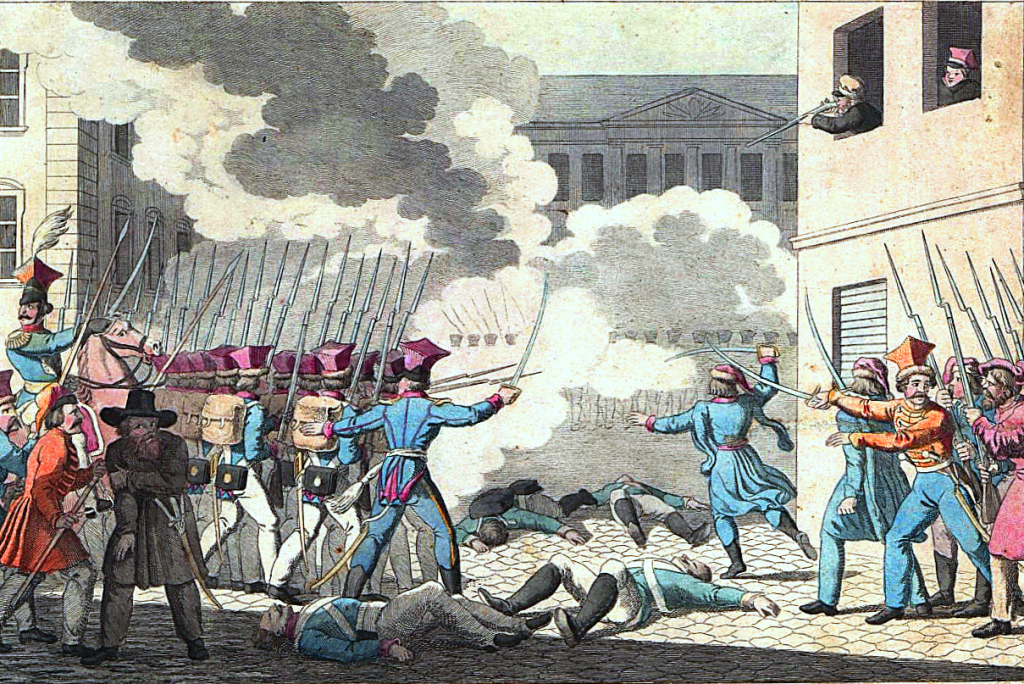
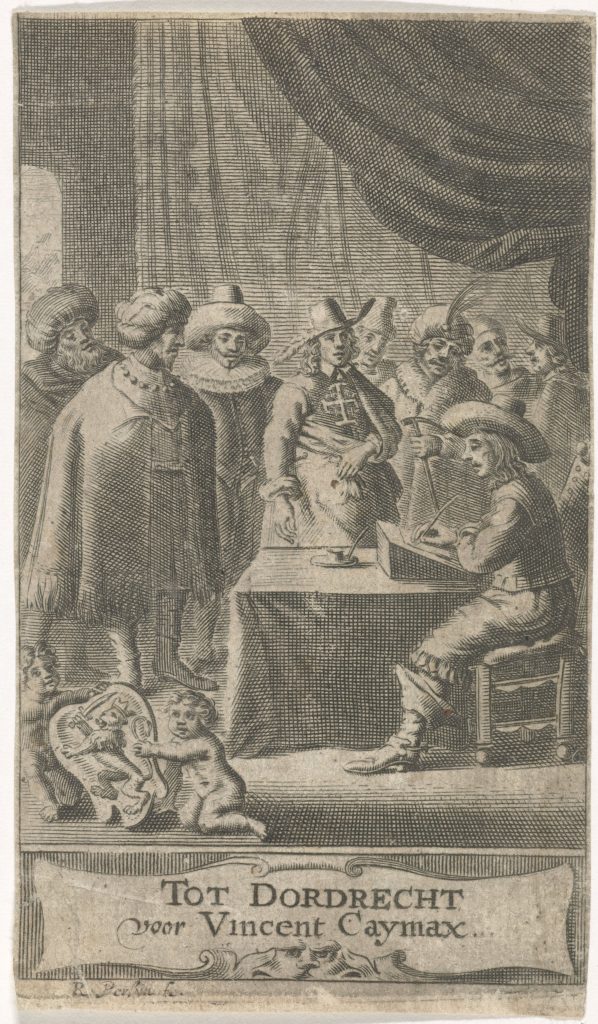 Joris’s representation of Poland is generally favourable. Describing Cracow, he professed that: “it lies along the Vistula river, which also flows past the royal castle, placed on an elevated mound. Because of the splendour of its buildings, the affluence of all manner of goods, and various kinds of scholarly disciplines, the city itself contends with the illustrious towns of Germany.” In addition, Joris enthusiastically related his visit to the nearby Wieliczka salt mines, which attracted the attention of various foreign scholars and travellers. He also visited the poet Szymon Szymonowicz (1558-1629) in Lviv, and he befriended a Polish diplomat in Constantinople, who shared his interest for classical literature. Returning home, furthermore, Joris stayed in Zamość, a city founded in 1580 by the Grand Chancellor Jan Zamoyski (1542-1605), who was a friend of Joris’s father. Zamość also included an academy for higher education. Joris elaborately praised the city as “an effigy not just to Poland, but to the whole of Europe”, and he applauded the learnedness of Zamoyski himself. His flattering words were no doubt meant to strengthen his bonds with his Polish contacts. The account is an interesting testimony to the historical ties and friendships between Dutch and Polish scholars.